Are you often asked“What’s the real difference between digital and offset printing?” While both deliver fantastic results, they are fundamentally different technologies, each excelling in specific scenarios. Choosing the right one can save you time, money, and ensure your project looks its absolute best.
Let’s break down the essentials.
The Core Difference: How the Ink Hits the Paper
Offset printing is a traditional, master-plate technique, while digital printing is a modern, direct-to-paper process.
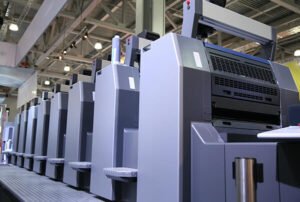
Offset Printing (Lithography): This is a classic, chemistry-mechanics-and-precision ballet. Your design is etched onto metal plates (one for each ink color: Cyan, Magenta, Yellow, and Black – CMYK). The ink sticks to the image areas on the plate, is transferred (or “offset”) onto a rubber blanket cylinder, and then rolled onto the paper. It’s an indirect method, hence the name “offset.”
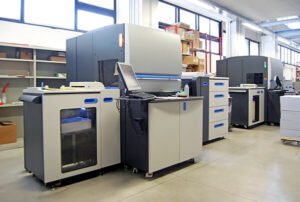
Digital Printing: This is the tech-savvy cousin. Your digital file (PDF, InDesign, etc.) goes straight from the computer to the press, much like a sophisticated office printer. Most commercial digital presses use electrostatic rollers (toner) or inkjet technology to apply the image directly onto the paper. No physical plates are needed.
Key Comparisons: Breaking Down the Choice
| Feature | Digital Printing | Offset Printing |
| Setup & Cost | Virtually no setup. Low cost for small runs. | High initial setup (plates, calibration). Cost-effective for large quantities. |
| Turnaround | Very fast. Print-on-demand, often same-day. | Slower due to setup and drying time. |
| Customization | Excellent. Every sheet can be different (variable data). | Fixed. All copies are identical once plates are made. |
| Color & Quality | Very high quality, but can struggle with exact brand colors (PMS). Best for digital files (RGB/CMYK). | Superior color fidelity, rich solids, and precise PMS matching. The gold standard for color-critical work. |
| Materials | Good on standard stocks, coated/uncoated paper. Limited in substrate range. | Exceptional versatility. Can print on almost anything—paper, cardboard, plastic, metal. |
| Best For | Short runs (1-500), quick proofs, personalized marketing, variable data, on-demand books. | Long runs (500+), high-volume marketing, brochures, magazines, packaging, any precise color job. |
So, Which One Should You Choose?
Here’s your quick decision guide:
Choose Digital Printing if:
Your print run is short (under 500 copies).
You need it fast with minimal setup.
You require personalization.
You’re doing prototyping or frequent version updates.
Choose Offset Printing if:
Your quantity is high (over 500-1000 units). The per-unit cost drops dramatically.
Color accuracy is non-negotiable (e.g., company branding with specific Pantone colors).
You’re using special inks, varnishes, or unusual materials.
You need the absolute highest image quality on large, consistent print runs.
Final Thought: There’s no “better” technology—only the right tool for the job. For a quick, customized batch of 100 conference folders, digital is your hero. For 50,000 glossy product catalogs with perfect color, offset remains the undisputed champion.
My best advice? Always consult with your print partner. A good printer will ask about your quantity, deadline, budget, and quality expectations to guide you to the perfect print method for your project’s success.
Leave a Reply